Blood Pressure Chart: Understanding Your Numbers
When you visit the doctor or use a home monitor, you are given two numbers, such as 120/80 mmHg. But what do these numbers actually mean? Hypertension, or high blood pressure, often has no visible symptoms, making it essential to understand how to read a standard blood pressure chart to protect your cardiovascular health.
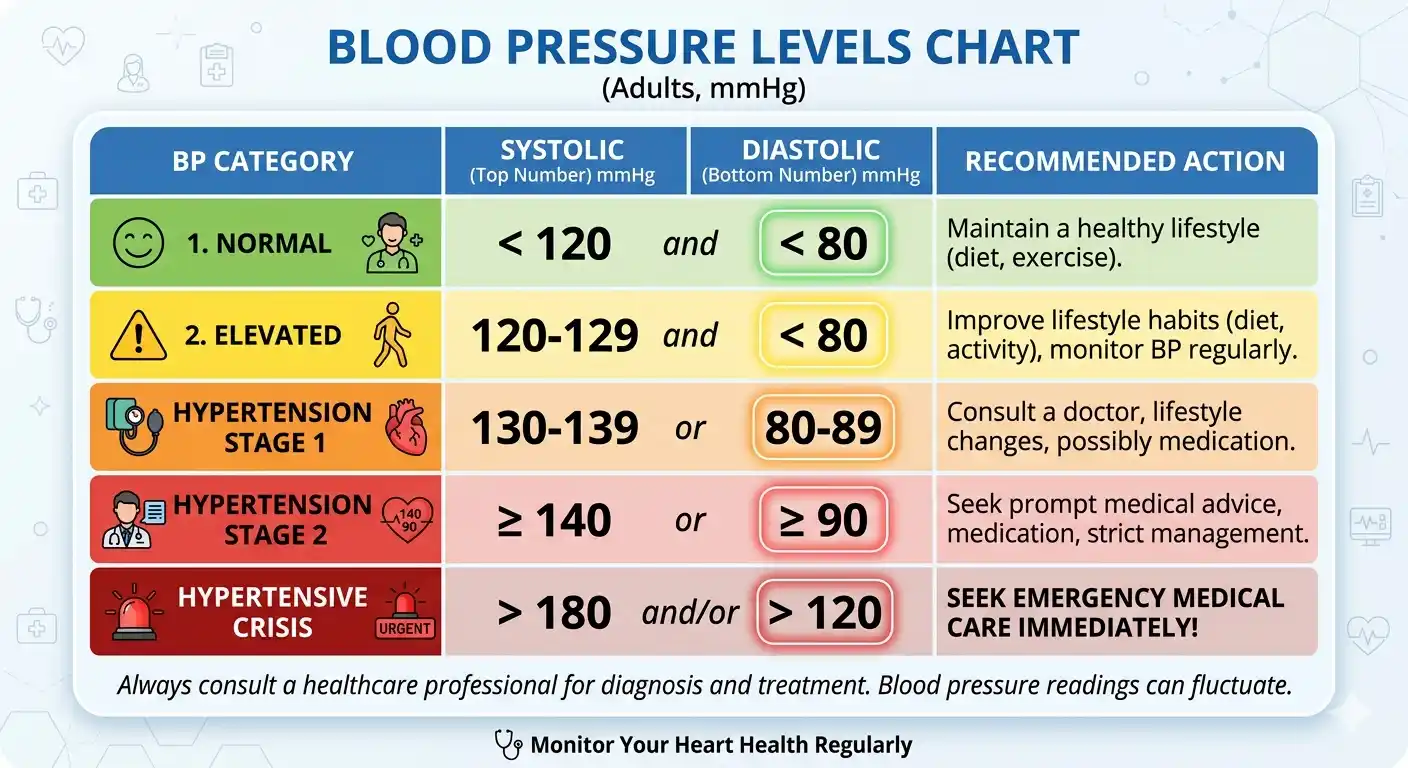
Standard AHA Blood Pressure Categories
In this comprehensive guide, we will break down the American Heart Association (AHA) blood pressure categories, explain the difference between systolic and diastolic pressure, and help you determine when it is time to take action.
Systolic vs. Diastolic: The Basics
Before looking at the categories, you need to understand the two numbers that make up your reading:
- Systolic Pressure (Top Number): This measures the force your blood exerts on the walls of your arteries when your heart beats. It is the higher of the two numbers.
- Diastolic Pressure (Bottom Number): This measures the pressure in your arteries when your heart is resting between beats.
The 5 Blood Pressure Categories
The AHA categorizes blood pressure into five distinct stages. Here is what your numbers say about your health:
1. Normal
Reading: Less than 120 systolic AND less than 80 diastolic.
If your numbers are in this range, your heart is functioning efficiently. Maintain your healthy lifestyle with a balanced diet and regular exercise.
2. Elevated
Reading: 120-129 systolic AND less than 80 diastolic.
People with elevated blood pressure are at a high risk of developing hypertension unless they take steps to control their condition, such as reducing sodium intake and managing stress.
3. High Blood Pressure (Stage 1)
Reading: 130-139 systolic OR 80-89 diastolic.
At this stage, doctors are likely to prescribe lifestyle changes and may consider adding blood pressure medication depending on your risk of cardiovascular disease.
4. High Blood Pressure (Stage 2)
Reading: 140 or higher systolic OR 90 or higher diastolic.
This is a more severe stage of hypertension. Doctors will typically prescribe a combination of blood pressure medications and strict lifestyle modifications.
5. Hypertensive Crisis
Reading: Higher than 180 systolic AND/OR higher than 120 diastolic.
This is a medical emergency. If your readings are this high, wait five minutes and test again. If they remain above 180/120, contact emergency medical services immediately.
Want to know which category your numbers fall into instantly?
Use Our Free Blood Pressure CalculatorFrequently Asked Questions (FAQs)
Disclaimer: The blood pressure chart and information provided are for educational purposes only. Always consult a licensed physician or healthcare provider for professional medical advice, diagnosis, or treatment.