AHA Guidelines: How to Monitor Your Blood Pressure at Home
For individuals managing hypertension, checking your numbers in a doctor's office once or twice a year is simply not enough. The American Heart Association (AHA) strongly recommends home monitoring for anyone who has been diagnosed with high blood pressure, as well as those starting a new medication or making significant lifestyle changes.
Home monitoring gives your healthcare provider a clear, comprehensive view of your baseline metrics, eliminating false spikes caused by the stress of a doctor's visit (White Coat Syndrome). However, to get clinical-grade accuracy, you must follow specific protocols. Here are the official AHA guidelines for checking your blood pressure at home.
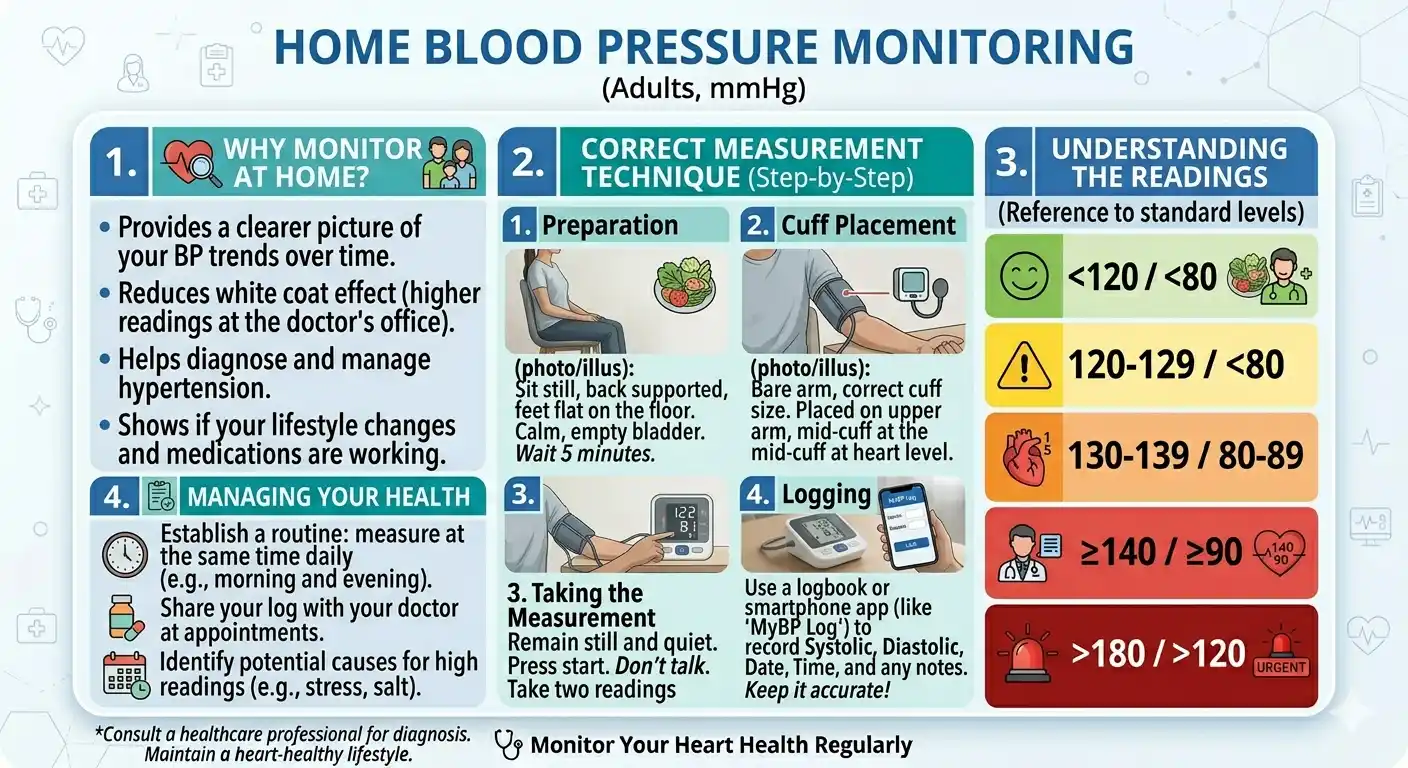
1. Choosing the Right Monitor
Not all blood pressure monitors are created equal. The AHA provides very specific advice on the type of equipment you should purchase:
- Use an Upper Arm Cuff: The AHA recommends an automated, bicep (upper arm) monitor. Wrist and finger monitors yield less reliable readings and are generally discouraged.
- Check for Validation: Ensure the device you purchase is validated for clinical accuracy. You can often check this by looking for an FDA clearance or verifying the brand on standard medical registries.
- Size Matters: A poorly fitting cuff is the number one cause of inaccurate readings. If a cuff is too small, your numbers will be artificially high. Measure around your bare upper arm to ensure you buy the correct cuff size.
2. Preparation: The 30 Minutes Before
Your daily activities heavily impact your cardiovascular system. To get a true resting baseline, you must prepare your body before pressing the start button.
- Do not smoke, consume caffeine, or exercise within 30 minutes of taking your measurement.
- Empty your bladder beforehand (a full bladder can increase your systolic pressure).
- Sit in a chair, completely relaxed, for at least 5 minutes before taking a reading.
3. The Correct Posture
Even if you have the best monitor in the world, sitting incorrectly will ruin your results. Follow this checklist for proper posture:
- Sit straight with your back supported by a firm chair (avoid soft couches).
- Keep your feet completely flat on the floor. Do not cross your legs.
- Place your arm on a flat surface (like a dining table) so that your bicep is exactly at heart level.
- Place the cuff directly on your bare skin. Never measure over clothing.
4. Taking the Measurement
Take your readings at the exact same time every day. The AHA suggests taking them twice daily: once in the morning before taking medications, and once in the evening.
When you start the machine, do not talk. Even whispering can raise your numbers. Take two or three readings exactly one minute apart, and record the results. Most modern digital monitors will calculate the average of these readings for you.
When to Seek Emergency Help
If your reading is 180/120 mmHg or higher, wait five minutes and test again. If the numbers are still unusually high, you are experiencing a Hypertensive Crisis. Contact your doctor immediately or call 911 if you experience chest pain, shortness of breath, back pain, numbness, or difficulty speaking.
Want to instantly analyze your numbers based on AHA standards?
Use Our Online BP CalculatorFrequently Asked Questions (FAQs)
Medical Disclaimer: The contents of this article are based on standard American Heart Association guidelines and are for informational purposes only. They do not substitute for professional medical advice, diagnosis, or treatment from a licensed physician.